

Astronomy is one of the oldest sciences in human history. Long before modern observatories, space telescopes, and computer simulations existed, people looked up at the night sky and tried to understand the mysterious lights moving above them.
The Moon, planets, and stars helped ancient civilizations measure time, navigate across oceans, create calendars, and develop early ideas about the nature of the universe.
But astronomy has changed dramatically over the centuries.
Today, astronomers can observe galaxies billions of light-years away, detect planets orbiting distant stars, study the chemical composition of stellar atmospheres, map the surface of other worlds, and even observe gravitational waves produced by violent cosmic events.
Much of this progress has been made possible by one thing: technology.
As technology has improved, astronomers have gained new ways to observe the universe, collect information, process enormous amounts of data, and explore places that would otherwise remain completely inaccessible.
From the First Telescopes to Modern Observatories

Few inventions have changed astronomy as profoundly as the telescope.
Telescopes made it possible for humans to observe objects in the sky with far greater detail than the naked eye could provide. In the early 17th century, Galileo Galilei improved the design of the newly invented telescope and began using it for systematic astronomical observations.
His observations revealed mountains and craters on the Moon, the phases of Venus, four large moons orbiting Jupiter, and countless previously unseen stars.
These discoveries helped challenge the traditional view that Earth was at the center of the universe.
The story of Galileo is a fascinating example of how technological innovation can change scientific thinking. His observations did not simply add new details to astronomy—they helped change humanity's understanding of its place in the cosmos.
Over the centuries, telescopes became larger, more precise, and increasingly sophisticated. Mirrors replaced lenses in many large observatories, allowing astronomers to build instruments capable of collecting much more light.
Modern telescopes can also observe far more than visible light.
Seeing the Universe Beyond Visible Light
Human eyes can detect only a small portion of the electromagnetic spectrum, known as visible light.
The universe, however, produces many different types of electromagnetic radiation.
Radio waves, microwaves, infrared radiation, visible light, ultraviolet radiation, X-rays, and gamma rays can all carry information about astronomical objects.
This means that observing the universe at different wavelengths is like looking at the same landscape using different types of cameras. Each reveals something different.
Optical telescopes observe visible light and can produce spectacular images of stars, planets, nebulae, and galaxies.
Infrared telescopes can detect heat and peer through clouds of dust that block visible light. They are particularly useful for studying star formation and distant galaxies.
Radio telescopes detect radio waves produced by objects and processes ranging from pulsars to enormous clouds of gas and activity around black holes.
X-ray telescopes are especially useful for studying extremely energetic environments, including supernova remnants, neutron stars, and material falling toward black holes.
By combining observations from different wavelengths, astronomers can build a much more complete picture of an astronomical object.
This approach has transformed modern astronomy.
Space Telescopes: Observing Above Earth's Atmosphere

Earth's atmosphere is essential for life, but it creates significant problems for astronomers.
Atmospheric turbulence can make distant objects appear to shimmer, reducing the sharpness of astronomical observations. In addition, Earth's atmosphere blocks many wavelengths of electromagnetic radiation from reaching the surface.
One solution is to place telescopes in space.
The Hubble Space Telescope, launched in 1990, became one of the most influential scientific instruments ever created. Operating above Earth's atmosphere allowed Hubble to obtain remarkably detailed images of distant galaxies, nebulae, star-forming regions, and other cosmic objects.
Hubble also played an important role in measuring the expansion of the universe and studying the ages and evolution of stars and galaxies.
But Hubble is only one part of a much larger family of space observatories.
More recently, the James Webb Space Telescope (JWST) has expanded our ability to observe the universe, particularly in infrared wavelengths. Its enormous primary mirror and sensitive instruments allow scientists to study some of the earliest galaxies in cosmic history, distant exoplanets, stellar nurseries, and the atmospheres of planets outside our Solar System.
The development of new space telescopes continues to push the boundaries of what astronomers can observe.
NASA's next great space telescope is part of this continuing story of technological progress, showing how the next generation of observatories could expand our ability to investigate the universe.
Space Probes: Exploring Other Worlds
Telescopes allow us to observe distant objects, but sometimes scientists need to get much closer.
This is where space probes become essential.
Space probes are robotic spacecraft designed to travel through space and collect scientific information. Unlike telescopes, which generally observe objects from a distance, probes can travel directly to planets, moons, asteroids, and comets.
Some missions have performed flybys, while others have entered orbit around their targets. A few have even landed on the surfaces of other worlds.
The information collected by these spacecraft has completely changed our understanding of the Solar System.
For example, robotic missions have revealed the enormous volcanoes of Mars, the complex atmosphere of Titan, the icy surfaces of the outer moons, the ancient geology of Mercury, and the surprising diversity of asteroids and comets.
Spacecraft can carry cameras, spectrometers, magnetometers, radar systems, radiation detectors, and many other scientific instruments.
Each instrument is designed to answer a different question.
A camera can photograph the surface of a planet. A spectrometer can determine what materials are present. A magnetometer can investigate a planet's magnetic field. Radar can sometimes see through clouds or penetrate beneath a surface.
Together, these instruments turn a spacecraft into a robotic scientific laboratory.
Satellites and Space-Based Astronomy
Artificial satellites have also played an important role in astronomy.
Some space observatories operate as satellites orbiting Earth, while others travel around the Sun or occupy specialized locations in space.
Their advantage is that they can observe the universe without many of the limitations imposed by Earth's atmosphere.
The Chandra X-ray Observatory, for example, is designed to observe X-rays from some of the most energetic objects in the universe. Because Earth's atmosphere blocks most cosmic X-rays, an X-ray observatory needs to operate in space.
Chandra has helped scientists study supernova remnants, neutron stars, galaxy clusters, and the regions surrounding black holes.
Different space observatories therefore complement one another. Instead of relying on a single telescope, astronomers can combine data from several instruments operating at different wavelengths.
This is known as multiwavelength astronomy.
Ground-Based Observatories Still Matter
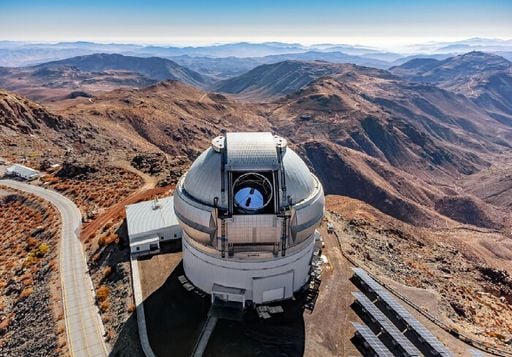
Space telescopes receive much of the public attention, but Earth-based observatories remain essential to modern astronomy.
Large observatories can be equipped with enormous mirrors and sophisticated instruments. Some of the world's largest optical telescopes are located on high mountains, where the air is thinner, drier, and less turbulent.
Location matters.
Light pollution from cities can make faint astronomical objects difficult to observe, while atmospheric water vapor can interfere with infrared observations.
Radio astronomy has similar challenges. Radio telescopes need locations with minimal human-made radio interference.
One of the most famous examples was the Arecibo Observatory in Puerto Rico. For decades, its enormous radio dish was an important instrument for astronomy and planetary science. It contributed to studies of pulsars, asteroids, planetary atmospheres, and the search for signals from intelligent civilizations.
The Arecibo telescope ultimately collapsed in December 2020 after structural failures, ending its scientific operations.
Its history, however, remains an important part of the development of radio astronomy.
Modern radio observatories continue this work using networks of antennas and increasingly sophisticated digital systems.
Computers Have Changed Astronomy
Technology has not only improved telescopes and spacecraft.
Computers have completely transformed the way astronomers work.
Modern telescopes can generate enormous quantities of data. A single observing project can produce more information than a person could realistically examine manually.
Computers are therefore used to process, organize, compare, and analyze astronomical observations.
Advanced software can identify patterns in images, measure the brightness of stars, track moving objects, analyze spectra, and detect tiny changes in stellar light.
Computational methods are also essential for discovering exoplanets.
When a planet passes in front of its star, the resulting decrease in brightness can be extremely small. Automated systems can analyze repeated measurements and identify these subtle signals.
Artificial intelligence and machine learning are becoming increasingly useful as astronomical datasets continue to grow.
Instead of replacing astronomers, these technologies help researchers deal with an amount of information that would otherwise be impossible to manage efficiently.
Technology and the Search for Exoplanets
One of the most exciting areas of modern astronomy is the discovery of planets orbiting other stars.
For most of human history, we had no confirmed evidence that planets existed outside our Solar System.
Today, thousands of exoplanets have been confirmed.
Much of this progress has been made possible by highly sensitive instruments and increasingly sophisticated data analysis.
The transit method, for example, measures tiny decreases in a star's brightness when a planet passes in front of it.
Other techniques measure the gravitational influence of an orbiting planet on its star.
Once an exoplanet has been identified, astronomers can sometimes investigate its atmosphere using spectroscopy.
This is particularly exciting because atmospheric observations can reveal molecules such as water vapor, carbon dioxide, methane, and other gases.
The ultimate goal is not simply to discover more planets, but to understand what these distant worlds are actually like.
Technology Can Take Us Further Into the Past
One of the strangest facts about astronomy is that looking farther into space also means looking farther back in time.
Light does not travel instantaneously. It takes time to cross the universe.
When we observe a galaxy 100 million light-years away, we are seeing that galaxy as it existed roughly 100 million years ago.
The farther astronomers can see, the further back into cosmic history they can observe.
This is one reason why powerful telescopes are so important.
The James Webb Space Telescope, for example, is designed to observe extremely distant and faint objects whose light has traveled across the universe for billions of years.
In this sense, advanced astronomical technology acts almost like a time machine—not because it physically transports us into the past, but because it allows us to observe ancient light that has been traveling through space for billions of years.
The Future of Astronomy
The next generation of astronomical technology will continue to expand what scientists can detect.
New ground-based telescopes will use enormous mirrors, adaptive optics, and increasingly sensitive instruments. New space telescopes will observe different wavelengths and investigate parts of the universe that remain difficult to study.
At the same time, enormous astronomical surveys will map billions of stars and galaxies.
Technological advances are also making it possible to study phenomena that cannot be observed through ordinary telescopes.
The detection of gravitational waves, for example, opened an entirely new way of studying the universe. Instead of observing light, gravitational-wave observatories detect tiny distortions in spacetime produced by violent events such as merging black holes and neutron stars.
This represents a fundamental change in how humanity observes the cosmos.
Astronomy is no longer limited to what our eyes can see—or even to what traditional telescopes can detect.
Every major technological advance gives scientists another way to investigate the universe.
And often, the technology designed to answer one question ends up revealing something completely unexpected.
Read More
If you enjoyed exploring how technology has transformed our ability to study the universe, these articles offer two related perspectives:
Galileo Galilei: The Combination of Science and Art — Discover the lesser-known artistic and intellectual side of one of the most important figures in the history of astronomy.
NASA's Next Great Space Telescope — Explore how the next generation of space telescopes could expand our view of the universe.
No comments: