
A new eye has opened toward the universe.
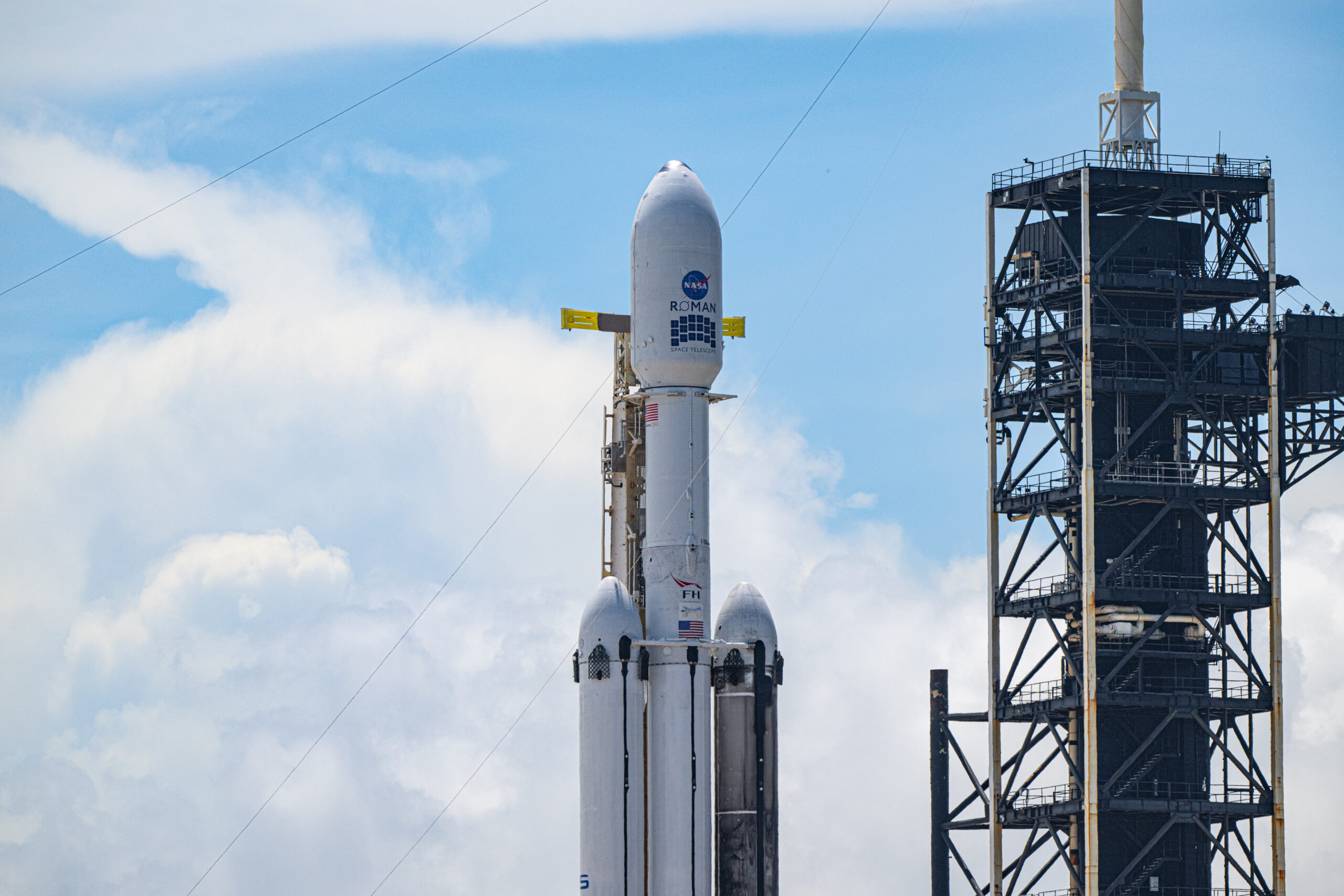
On August 30, 2026, NASA successfully launched the Nancy Grace Roman Space Telescope, one of the agency's most ambitious space observatories in decades. Riding aboard a SpaceX Falcon Heavy rocket from Kennedy Space Center in Florida, the telescope began a journey that could help astronomers answer some of the biggest questions in modern science.
What is dark energy?
What is dark matter?
How did the universe evolve?
How common are planets beyond our Solar System?
The Roman Space Telescope was designed to investigate all of these mysteries—and potentially discover many things scientists have not even imagined yet.
Unlike some space telescopes that focus intensely on relatively small areas of the sky, Roman has been built to see the universe on a much larger scale. Its combination of a wide field of view and powerful infrared vision will allow astronomers to survey enormous regions of space while still capturing remarkable levels of detail.
NASA describes Roman as a mission capable of exploring everything from planets in our own cosmic neighborhood to galaxies near the edge of the observable universe.
And its journey has only just begun.
A Successful Launch Into a New Scientific Mission
The Nancy Grace Roman Space Telescope lifted off at 7:26 a.m. EDT on August 30 aboard a SpaceX Falcon Heavy rocket from Launch Complex 39A at NASA's Kennedy Space Center in Florida.
Shortly after launch, Roman successfully separated from the rocket's upper stage and established communications with mission controllers.
The observatory is now traveling toward its destination near the second Sun-Earth Lagrange point, commonly known as L2.
Located roughly one million miles from Earth, L2 is a particularly useful location for space observatories. From there, Roman will be able to maintain a stable position relative to Earth and the Sun while keeping its sensitive instruments protected from unwanted heat and light.
The telescope's journey to this location is expected to take approximately three months. Once it arrives, engineers will continue preparing and testing the observatory before scientific operations begin.
The launch itself is only the first chapter of the mission.

Why Is the Roman Space Telescope So Important?
Roman was designed to do something that few previous space telescopes have been able to accomplish: observe huge sections of the sky with an extremely wide field of view.
NASA says Roman's field of view will be at least 100 times larger than Hubble's.
This does not mean Roman will simply replace Hubble.
The two telescopes were designed for different purposes.
Hubble can focus on relatively small areas of the sky in extraordinary detail. Roman, meanwhile, will be capable of creating much wider surveys.
Imagine looking at the universe through a narrow window.
Hubble can examine what is visible through that window in remarkable detail.
Roman can open the window dramatically wider.
This ability will allow astronomers to collect enormous amounts of information about stars, galaxies, and other objects across the universe.
Roman is expected to survey billions of galaxies during its mission and produce a massive archive of scientific data that researchers around the world will be able to study.
Its wide perspective could help scientists see patterns that are difficult to detect when observing only small regions of space.

A Mission to Investigate Dark Energy
One of Roman's most important scientific goals is the study of dark energy.
Dark energy is one of the greatest mysteries in modern physics.
Scientists know that the universe is expanding. Even more surprisingly, observations have shown that this expansion is accelerating.
Something appears to be pushing the universe apart at an increasing rate.
Scientists call this unknown phenomenon dark energy.
The problem is that nobody knows exactly what dark energy is.
It cannot be directly observed like a star or planet. Instead, scientists infer its existence by observing its effects on the large-scale structure and expansion of the universe.
Roman will help astronomers investigate this mystery by observing enormous numbers of galaxies and studying how the universe has expanded throughout cosmic history.
The telescope's wide-field surveys could provide one of the most detailed maps of the universe ever created.
By comparing the positions and distances of billions of galaxies, scientists hope to gain a better understanding of how cosmic expansion has changed over time.
Searching for the Invisible Universe
Roman will also investigate another major cosmic mystery: dark matter.
Unlike ordinary matter, dark matter does not appear to emit, reflect, or absorb light in a way that telescopes can directly observe.
Yet astronomers know that something invisible is affecting the motion of galaxies and galaxy clusters.
Without dark matter, many galaxies would not behave the way they do.
One of the ways scientists study dark matter is through a phenomenon known as gravitational lensing.
According to Einstein's theory of general relativity, massive objects can bend spacetime.
When light from a distant galaxy travels through regions containing large amounts of matter, its path can become slightly distorted.
This distortion can reveal information about matter that cannot be directly seen.
Roman's ability to survey enormous portions of the sky will make it especially useful for studying these subtle distortions.
Scientists hope to use these observations to create detailed maps showing how dark matter is distributed throughout the universe.
In other words, Roman may help astronomers map something they cannot actually see.
A New Way to Study Exoplanets
Roman will not focus exclusively on the distant universe.
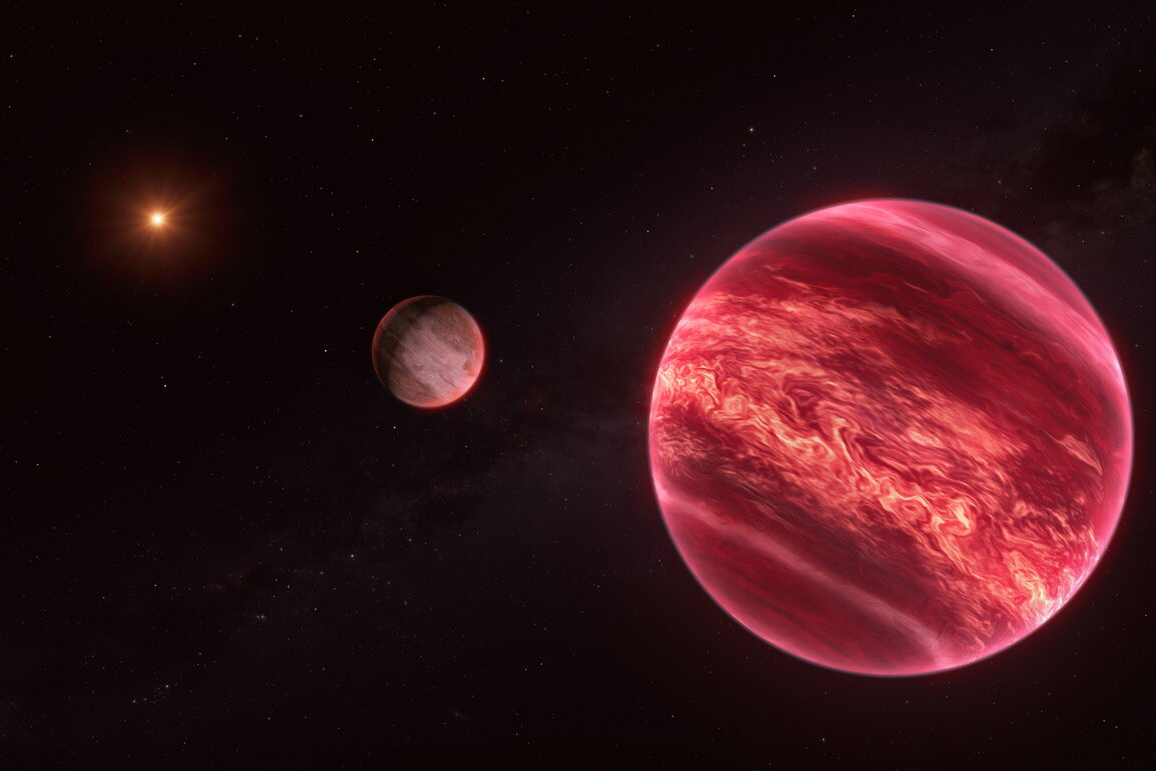
The telescope will also investigate planets orbiting other stars.
Thousands of exoplanets have already been discovered, revealing that planetary systems are common throughout the Milky Way.
But astronomers still have many questions.
How common are planetary systems similar to our own?
How many planets orbit distant stars?
How often do planets exist far from their host stars?
Roman will help answer these questions using several techniques, including microlensing.
Microlensing occurs when the gravity of a foreground star temporarily magnifies the light of a more distant star.
If the foreground star has planets, those planets can produce additional changes in the observed light.
By monitoring enormous numbers of stars, astronomers can detect these temporary signals and discover planets that might otherwise remain invisible.
This technique is particularly valuable because it can reveal planets at distances and masses that are difficult to detect using other methods.
NASA expects Roman's surveys to discover a vast number of previously unknown worlds and contribute to a more complete understanding of planetary populations in the Milky Way.
The mission is expected to detect approximately 100,000 new exoplanets, dramatically expanding our understanding of how common different types of planetary systems may be.
Looking Directly at Distant Worlds
Roman will also include a remarkable technology demonstration known as the Coronagraph Instrument.
One of the biggest challenges in directly observing an exoplanet is the brightness of its star.
Imagine trying to see a tiny firefly flying next to a powerful searchlight from thousands of kilometers away.
That is similar to the challenge astronomers face when trying to photograph a planet orbiting another star.
The light from the star can completely overwhelm the faint reflected light coming from the planet.
A coronagraph is designed to block part of the starlight, making it easier to detect faint objects nearby.
Roman's Coronagraph Instrument is expected to demonstrate new technologies that could eventually make it easier for future missions to directly image Earth-like planets.
This technology could play an important role in the future search for potentially habitable worlds.
Why Roman Observes in Infrared Light
Human eyes see only a small part of the electromagnetic spectrum.
Roman, however, was designed primarily to observe the universe in infrared light.
This gives astronomers several important advantages.
Infrared light can pass through clouds of cosmic dust that often block visible light.
This allows astronomers to study regions where stars are forming and investigate objects hidden behind thick clouds of gas and dust.
Infrared observations are also extremely important for studying the distant universe.
Because the universe is expanding, light from distant galaxies becomes stretched as it travels through space.
This process is known as redshift.
Light that originally left a distant galaxy at visible wavelengths can eventually reach us as infrared radiation.
By observing in infrared wavelengths, Roman will be able to study galaxies from earlier periods of cosmic history.
In a sense, the telescope will allow astronomers to look deeper into the past.
Roman and the Legacy of Nancy Grace Roman
The telescope is named after Nancy Grace Roman, often called the "Mother of Hubble."
Roman was NASA's first Chief Astronomer and played an important role in convincing the scientific community and government officials that large telescopes should operate in space.
Her work helped establish the foundations for missions such as the Hubble Space Telescope.
At a time when women faced significant barriers in scientific careers, Nancy Grace Roman became one of the most influential figures in the history of American astronomy.
Naming this observatory after her is particularly appropriate.
The telescope represents the continuation of an idea she helped bring into reality: humanity's ability to place powerful observatories beyond Earth's atmosphere and use them to explore the universe in ways that were once impossible.

Roman Will Work Alongside Other Great Telescopes
The launch of Roman does not mean the end of other space telescopes.
Instead, Roman will become part of an increasingly powerful network of astronomical observatories.
The Hubble Space Telescope continues to provide extraordinary observations across several wavelengths.
The James Webb Space Telescope is designed to observe the universe in unprecedented infrared detail.
Roman will contribute something different: an enormous field of view combined with powerful infrared capabilities.
These telescopes are not competitors.
They complement one another.
Roman may discover an unusual galaxy or planetary system during a wide survey. Other observatories could then study that object in greater detail.
This combination of wide surveys and detailed observations is becoming increasingly important in modern astronomy.
A telescope can find something interesting.
Another telescope can investigate it more closely.
Together, they allow scientists to understand the universe from multiple perspectives.
The Beginning of a Data Revolution
Roman's mission will generate an extraordinary amount of scientific information.
NASA expects the observatory to produce vast quantities of data that will be made available to researchers.
This means that Roman's discoveries may not come only from the scientists who designed the mission.
Astronomers around the world will have opportunities to examine its observations and search for patterns, unusual objects, and previously unknown phenomena.
This is one of the most exciting aspects of modern astronomy.
A telescope may be launched with a specific set of scientific objectives, but its data can remain useful for decades.
Scientists often discover things that were not part of the original mission plan.
Unexpected discoveries are part of astronomy's history.
When Hubble was launched, nobody could predict every scientific breakthrough it would eventually produce.
The same will likely be true for Roman.
Some of its most important discoveries may be things that scientists are not even looking for yet.
What Happens Next?
Roman's launch is only the beginning.
The spacecraft is currently traveling toward L2, where it will begin the next phase of its mission.
Over the coming months, engineers and scientists will carefully check the observatory's systems and instruments.
Once everything is ready, Roman will begin its scientific surveys.
The mission is planned to operate for at least five years, although space observatories can sometimes continue operating beyond their original mission timelines.
During that time, Roman will survey enormous regions of the sky, observe billions of galaxies, search for distant planets, and collect information that could help answer some of the most fundamental questions in cosmology.
Its observations could improve our understanding of the invisible components of the universe.
They could reveal new populations of planets.
They could help scientists understand how galaxies formed and evolved.
And they could uncover phenomena that nobody has predicted.
For now, the telescope is still traveling toward its destination.
But somewhere about one million miles ahead, a new observatory is preparing to open one of the widest windows humanity has ever created onto the universe.
Read More
The launch of Roman represents an important new chapter in the history of space-based astronomy. To explore more about the technology and people that helped make missions like this possible, you may also enjoy:
Galileo Galilei: The Combination of Science and Art
Discover the story of one of the most influential figures in the history of astronomy and how scientific observation transformed our understanding of the universe.
No comments: